

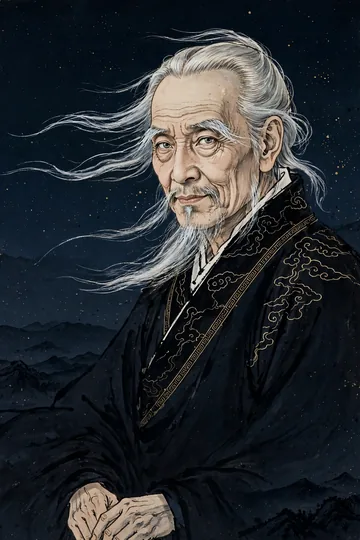
Sun Yat-sen
Sun Yat-sen
Forerunner of the Democratic Revolution
1866-11-12(5th year of the Tongzhi reign (Qing), 9th lunar month, day 6)~ 1925-03-12
Born in Cuiheng Village, Xiangshan County, Guangzhou Prefecture, Guangdong
Three-Pillar ChartBirth hour unknown — three pillars only
Year Pillar
丙寅
Element Fire · Wood
NaYin Furnace Fire
Ten Gods Direct Officer
Month Pillar
己亥
Element Earth · Water
NaYin Flatland Wood
Ten Gods Indirect Resource
Day Pillar
辛卯
Element Metal · Wood
NaYin Pine and Cypress Wood
Ten Gods Day Master
Hour Pillar
??
Hour unknown
Not cast
Day Master
辛Metal
Element distribution (three-pillar count)
Wood 3, Fire 2, Metal 1, Water 1, Earth 1
Chart computed by the MoZhu engine (lunar-javascript); without the hour pillar, luck pillars and yearly cycles can't fully unfold.
Case Review
Original writing · hindsight review · anchored in known history, viewed through chart structure
Xin (辛) Metal born in the Hai (亥) month is cold Metal in chilly Water, but fortunately Bing (丙) Fire appears in the year as Direct Officer. Tradition says “cold Metal that meets Fire is forged into a vessel,” which offers an angle of observation: Sun Yat-sen came from a farming family and trained as a physician, yet as a mere scholar he became the leader of a revolution. The Bing Fire is like the light of his idealism, forging the Xin Metal into something of use.
The Direct Officer in the year pillar signifies integrity and responsibility, in keeping with a life devoted to “the world belongs to all” and with his dying words still urging “peace, struggle.” The Indirect Resource in the month pillar points to original thinking and the resilience to rise after every defeat. His forty years of ceaseless effort, with nine of ten uprisings failing yet his resolve never wavering, can be observed in hindsight at a cultural level through the structure of “cold Metal forged by Fire, growing harder with each tempering.”
Birth date source:Chinese Wikipedia: “Sun Yat-sen”(cross-checked with public records; bio is an original summary)
This case is for traditional-culture study only, not a judgment of any historical figure; schools of interpretation differ, and these conclusions claim no exclusive truth.