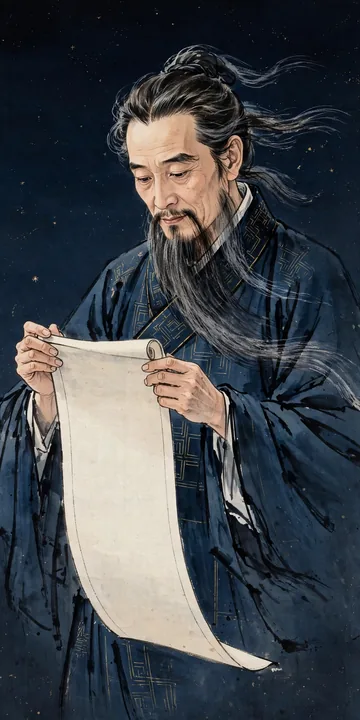
Wang Anshi
Wang Anshi
Northern Song reformer · One of the Eight Great Prose Masters of Tang and Song
1021-12-19(5th year of the Tianxi reign (Northern Song), 11th lunar month, day 13)~ 1086-05-21
Born in Linchuan, Jiangxi
Three-Pillar ChartBirth hour unknown — three pillars only
Year Pillar
辛酉
Element Metal · Metal
NaYin Pomegranate Wood
Ten Gods Direct Officer
Month Pillar
庚子
Element Metal · Water
NaYin Wall Earth
Ten Gods Seven Killings
Day Pillar
甲申
Element Wood · Metal
NaYin Spring Water
Ten Gods Day Master
Hour Pillar
??
Hour unknown
Not cast
Day Master
甲Wood
Element distribution (three-pillar count)
Metal 4, Wood 1, Water 1, Fire 0, Earth 0
Chart computed by the MoZhu engine (lunar-javascript); without the hour pillar, luck pillars and yearly cycles can't fully unfold.
Case Review
Original writing · hindsight review · anchored in known history, viewed through chart structure
Seven Killings and Direct Officer are both revealed, and Metal at 4 signifies decisiveness. Looking back on Wang Anshi's Xining reforms: the lonely courage of “heavenly portents need not be feared, ancestral ways need not be followed, people's talk need not be heeded” is the Seven Killings' edge; driving through the Green Sprouts and hired-service laws almost single-handedly is the Direct Officer's sense of responsibility. This reflects that structure.
Yet strong Metal snaps Wood: the reforms touched entrenched interests, he was abandoned by allies and friends, and he retired to Jinling in his later years — this can be observed in hindsight as “what is too rigid breaks easily.” His prose ranks among the Eight Great Masters of Tang and Song, the other face of Metal's refinement.
This is a cultural retrospective at the level of three pillars, not a fatalistic judgment.
Birth date source:Chinese Wikipedia: “Wang Anshi” (王安石)(cross-checked with public records; bio is an original summary)
This case is for traditional-culture study only, not a judgment of any historical figure; schools of interpretation differ, and these conclusions claim no exclusive truth.