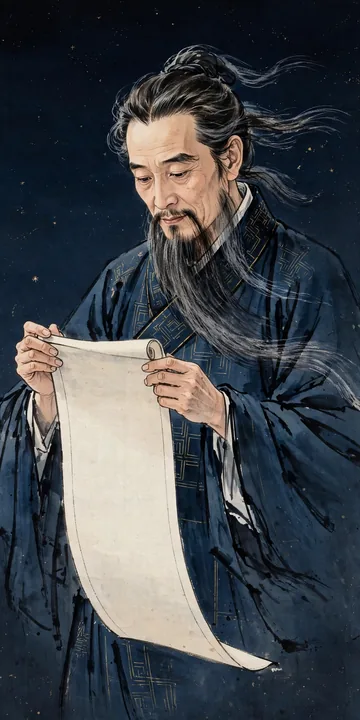


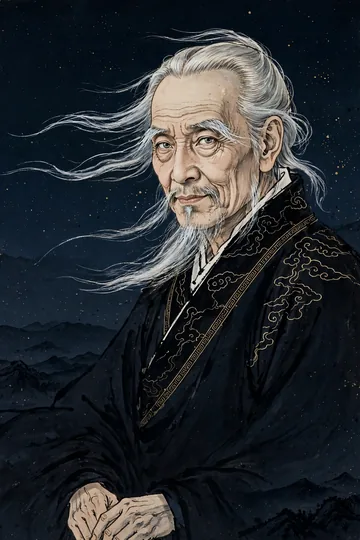
Wang Fuzhi
Wang Fuzhi
Late Ming–Early Qing Thinker · Philosopher
1619-10-07(47th year of the Wanli reign (Ming), 9th lunar month, day 1)~ 1692-02-18
Born in Hengyang, Hunan
Three-Pillar ChartBirth hour unknown — three pillars only
Year Pillar
己未
Element Earth · Earth
NaYin Heavenly Fire
Ten Gods Direct Resource
Month Pillar
癸酉
Element Water · Metal
NaYin Sword-Edge Metal
Ten Gods Hurting Officer
Day Pillar
庚辰
Element Metal · Earth
NaYin White Wax Metal
Ten Gods Day Master
Hour Pillar
??
Hour unknown
Not cast
Day Master
庚Metal
Element distribution (three-pillar count)
Earth 3, Metal 2, Water 1, Wood 0, Fire 0
Chart computed by the MoZhu engine (lunar-javascript); without the hour pillar, luck pillars and yearly cycles can't fully unfold.
Case Review
Original writing · hindsight review · anchored in known history, viewed through chart structure
Geng (庚) Metal is the Metal of axes and halberds, signifying sharpness and critique, with Direct Resource and Hurting Officer revealed in the year and month. Looking back on Wang Fuzhi’s life of reclusive writing at Chuanshan in Hengyang: the critical edge of his historical essays, On Reading the Comprehensive Mirror and On the Song, and his declaration that “the Six Classics demand that I open new vistas” mirror the Hurting Officer’s rebellion against received opinion and the sharp edge of Metal. Direct Resource signifies weighty scholarship, as seen in the solid rigor of his Commentary on Zhang Zai’s Correcting the Unenlightened.
Earth appears three times and generates Metal; his system of thought, a plain materialism (the “monism of qi”), can be given a retrospective footnote through the structure of “thick Earth, hard Metal.” There is no Fire in the three pillars; his teachings were neglected in his lifetime and only came to light a century after his death, an instance of “a precious sword hidden in its case.”
This is a cultural retrospective at the level of three pillars, not a fatalistic judgment.
Birth date source:Chinese Wikipedia: “Wang Fuzhi”(cross-checked with public records; bio is an original summary)
This case is for traditional-culture study only, not a judgment of any historical figure; schools of interpretation differ, and these conclusions claim no exclusive truth.