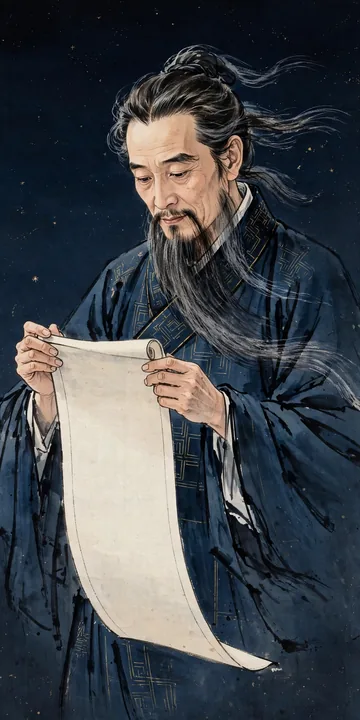


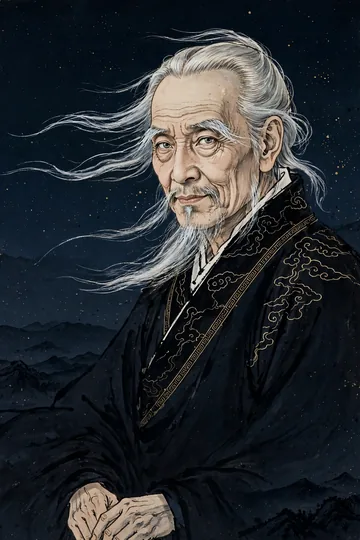
Xuanzang
Xuanzang
Eminent Tang Buddhist Monk · Translator of Buddhist Scriptures
0602-04-06(2nd year of the Renshou reign (Sui), 3rd lunar month, day 9)~ 0664-03-07
Born in Yanshi, Henan (Goushi County, Luozhou)
Three-Pillar ChartBirth hour unknown — three pillars only
Year Pillar
壬戌
Element Water · Earth
NaYin Great Sea Water
Ten Gods Direct Officer
Month Pillar
甲辰
Element Wood · Earth
NaYin Lamp Fire
Ten Gods Direct Resource
Day Pillar
丁亥
Element Fire · Water
NaYin Rooftop Earth
Ten Gods Day Master
Hour Pillar
??
Hour unknown
Not cast
Day Master
丁Fire
Element distribution (three-pillar count)
Earth 2, Water 2, Wood 1, Fire 1, Metal 0
Chart computed by the MoZhu engine (lunar-javascript); without the hour pillar, luck pillars and yearly cycles can't fully unfold.
Case Review
Original writing · hindsight review · anchored in known history, viewed through chart structure
Ding (丁) Fire is the Fire of lamps and candles, signifying civilization and a single point of clear awareness. Looking back on Xuanzang’s seventeen-year journey west, “defying the imperial ban to travel privately to India”: walking alone across the Mohe Yanqi desert, “with no birds above and no beasts below,” mirrors this single lamp that never goes out. Direct Officer and Direct Resource are revealed in the year and month: the Officer signifies monastic discipline and the Resource a teacher’s lineage, fitting his original vow on taking orders, “to carry on the Tathagata’s legacy from afar and bring light to the teaching that remains.”
Water and Earth are both strong: Earth signifies perseverance, Water wisdom. The geographical record of the Great Tang Records on the Western Regions and his 1,335 fascicles of translated scripture are a footnote to “Water and Earth forming a vessel.” Though the Ding Fire is weak, it is supported by Jia (甲) Wood as Direct Resource: “faith sustained by a teacher’s lineage is never extinguished,” which can serve as an observation at the cultural level.
This is a cultural retrospective at the level of three pillars, not a fatalistic judgment.
Birth date source:Chinese Wikipedia: “Xuanzang”(cross-checked with public records; bio is an original summary)
This case is for traditional-culture study only, not a judgment of any historical figure; schools of interpretation differ, and these conclusions claim no exclusive truth.