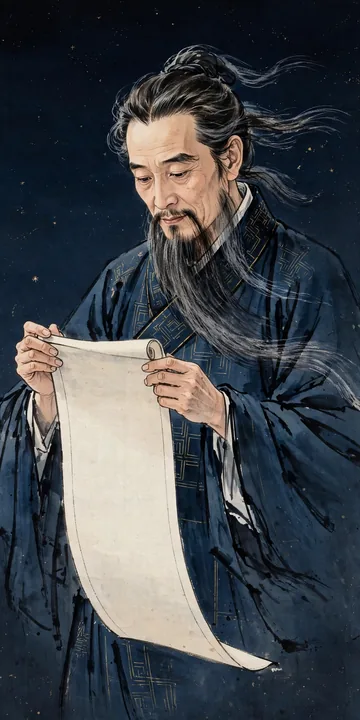


Cai Yuanpei
Cai Yuanpei
Modern Educator · President of Peking University
1868-01-11(6th year of the Tongzhi reign (Qing), 12th lunar month, day 17)~ 1940-03-05
Born in Shaoxing, Zhejiang
Three-Pillar ChartBirth hour unknown — three pillars only
Year Pillar
丁卯
Element Fire · Wood
NaYin Furnace Fire
Ten Gods Rob Wealth
Month Pillar
癸丑
Element Water · Earth
NaYin Mulberry Wood
Ten Gods Direct Officer
Day Pillar
丙申
Element Fire · Metal
NaYin Foot-of-Mountain Fire
Ten Gods Day Master
Hour Pillar
??
Hour unknown
Not cast
Day Master
丙Fire
Element distribution (three-pillar count)
Fire 2, Wood 1, Earth 1, Metal 1, Water 1
Chart computed by the MoZhu engine (lunar-javascript); without the hour pillar, luck pillars and yearly cycles can't fully unfold.
Case Review
Original writing · hindsight review · anchored in known history, viewed through chart structure
Bing (丙) Fire is the Fire of the sun, signifying openness and integrity, with Rob Wealth and Direct Officer revealed in the year and month, and all Five Phases present. Looking back on the life of Cai Yuanpei as president of Peking University: his guiding principle of “inclusiveness and freedom of thought” mirrors Bing Fire’s “shining on all alike.” Direct Officer signifies educational institution-building, as seen in faculty self-governance and his proposal to “replace religion with aesthetic education.”
Rob Wealth signifies his tireless mediation during the May Fourth upheavals. All Five Phases are present (Fire 2, Wood 1, Earth 1, Metal 1, Water 1); his non-partisan reconciliation of factions and his later journeys to Europe can be given a retrospective footnote through the structure of “the Five Phases flowing freely, embracing all,” which fits his educational philosophy well.
This is a cultural retrospective at the level of three pillars, not a fatalistic judgment.
Birth date source:Chinese Wikipedia: “Cai Yuanpei”(cross-checked with public records; bio is an original summary)
This case is for traditional-culture study only, not a judgment of any historical figure; schools of interpretation differ, and these conclusions claim no exclusive truth.