


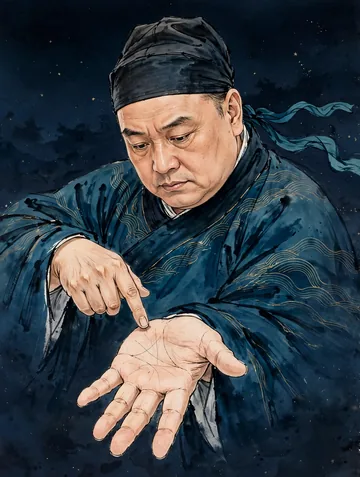
Chen Yinke
Chen Yinke
Historian · Master of Chinese Classical Learning
1890-07-03(16th year of the Guangxu reign (Qing), 5th lunar month, day 17)~ 1969-10-07
Born in Changsha, Hunan
Three-Pillar ChartBirth hour unknown — three pillars only
Year Pillar
庚寅
Element Metal · Wood
NaYin Pine and Cypress Wood
Ten Gods Direct Officer
Month Pillar
壬午
Element Water · Fire
NaYin Willow Wood
Ten Gods Direct Resource
Day Pillar
乙酉
Element Wood · Metal
NaYin Spring Water
Ten Gods Day Master
Hour Pillar
??
Hour unknown
Not cast
Day Master
乙Wood
Element distribution (three-pillar count)
Wood 2, Metal 2, Fire 1, Water 1, Earth 0
Chart computed by the MoZhu engine (lunar-javascript); without the hour pillar, luck pillars and yearly cycles can't fully unfold.
Case Review
Original writing · hindsight review · anchored in known history, viewed through chart structure
Yi (乙) Wood is the Wood of flowers and grasses, signifying pliant resilience, with Direct Officer and Direct Resource revealed in the year and month. Looking back on the life of Chen Yinke, “the professor of professors”: his scholarly character of “an independent spirit and freedom of thought,” his use of poetry to illuminate history, and the erudite elegance of his Biography of Liu Rushi mirror “Officer and Resource generating each other,” scholarship and integrity combined.
Metal controls Wood (Geng 庚 Metal revealed as Direct Officer). His blindness in later years and the ordeals he endured without bowing can be observed in hindsight from the angle of “Metal pruning Wood, yet the Wood not breaking.” The resilience of Yi Wood lies in “not breaking”: his persistence in dictating the Biography of Liu Rushi in old age is the ultimate footnote to the strength within supple Wood.
This is a cultural retrospective at the level of three pillars, not a fatalistic judgment.
Birth date source:Chinese Wikipedia: “Chen Yinke”(cross-checked with public records; bio is an original summary)
This case is for traditional-culture study only, not a judgment of any historical figure; schools of interpretation differ, and these conclusions claim no exclusive truth.