

Coming of Age (Guan Dai) — The Third of the Twelve Stages
In a Nutshell
The third of the Twelve Stages: like a young man receiving his cap and sash — maturing, and beginning to accept restraint.
Quick facts
| Item | Detail |
|---|---|
| Stage | Third of the Twelve Stages |
| Ordering rule | Yang stems move forward; yin stems move backward |
| Example | Jia Wood's Coming of Age falls on Chou |
What is Coming of Age (Guan Dai)?
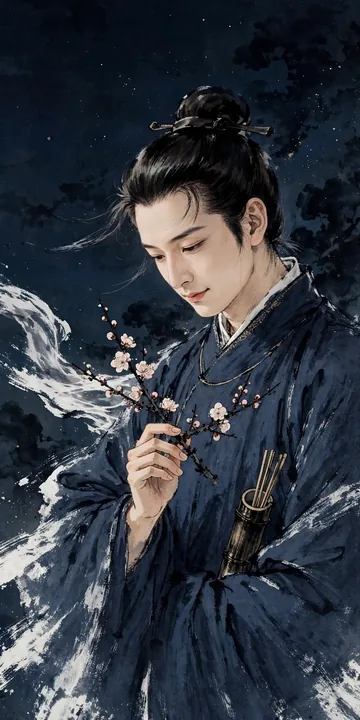
Coming of Age is the third stage of the "Twelve Stages." The full order is Birth, Bath, Coming of Age, Arrival, Peak, Decline, Sickness, Death, Grave, Extinction, Conception, Nurturing — Coming of Age follows Bath and precedes Arrival. "Guan Dai" refers to the ancient capping ceremony, when a young man at twenty received his cap and sash and became an adult; the ancients borrowed this image to describe the Five Elements' qi maturing from its first birth — beginning to carry dignity and restraint.
The ordering rule: yang stems move forward, yin stems move backward. Take Jia Wood: Jia's Birth is at Hai, counting forward — Hai is Birth, Zi is Bath, Chou is Coming of Age — so Jia Wood's Coming of Age falls on Chou. Each stem's Coming of Age branch: Jia–Chou, Yi–Chen, Bing–Chen, Ding–Wei, Wu–Chen, Ji–Wei, Geng–Wei, Xin–Xu, Ren–Xu, Gui–Chou (Wu follows Bing, Ji follows Ding). MoZhu's Twelve Stages lookup tool lays out each of the Four Pillars' stems automatically.
In traditional usage, Coming of Age is often associated with "things improving, scale beginning to form" — but that is imagery, not a prediction about real life. Unlike Bath, which carries the alternate name "Defeat," Coming of Age has no special alias and appears less often in the Symbolic Stars method; it shows up mostly when assessing the Day Master's Strength: a Day Master sitting on Coming of Age is traditionally read as a foundation growing steady.
Stage names describe only the rise and fall of the Five Elements' energy. For Coming of Age, the point is its position in the order and the counting rule — and how the ancients used a life stage to picture the Five Elements' changes. This page introduces the stage's meaning and the lookup method, and draws no inferences from it.
Classical sources
"The Five Elements lodge in twelve palaces: Birth, Bathing, Cap and Belt, Official Post, Emperor, Decline, Sickness, Death, Grave, Extinction, Conception, Nurture, circling without end."
Plain words: The fixed order of the Twelve Stages.
Source: *San Ming Tong Hui*, Book 2, "On the Prosperity and Decline of the Five Elements and Their Lodging in the Twelve Palaces" — original: 五行寄生十二宫:长生、沐浴、冠带、临官、帝旺、衰、病、死、墓、绝、胎、养,循环无端,周而复始。
"The San Ming Ti Yao says: … sixth, Cap and Belt: the myriad things gradually flourish, as a person puts on cap and robe."
Plain words: Cap and Belt is the coming-of-age stage when things begin to flourish. Jia Wood is at Cap and Belt in Chou, Yi Wood in Chen.
Source: *San Ming Tong Hui*, Book 2, "On the Prosperity and Decline of the Five Elements and Their Lodging in the Twelve Palaces", quoting the *San Ming Ti Yao* — original: 《三命提要》云:……六曰冠带,万物渐荣秀,如人具衣冠也。
"Yang gathers and advances, so it runs forward; yin disperses and retreats, so it runs backward. That is why Birth, Bathing and the rest differ, forward for yang and backward for yin."
Plain words: Yang stems count forward, yin stems backward, so the two stems of one element land on different branches.
Source: *Zi Ping Zhen Quan*, "On the Life and Death of Yin and Yang" — original: 阳主聚,以进为进,故主顺;阴主散,以退为退,故主逆。长生沐浴等项,所以有阳顺阴逆之殊也。
*For entertainment purposes only.*